Tropical Depression Simon
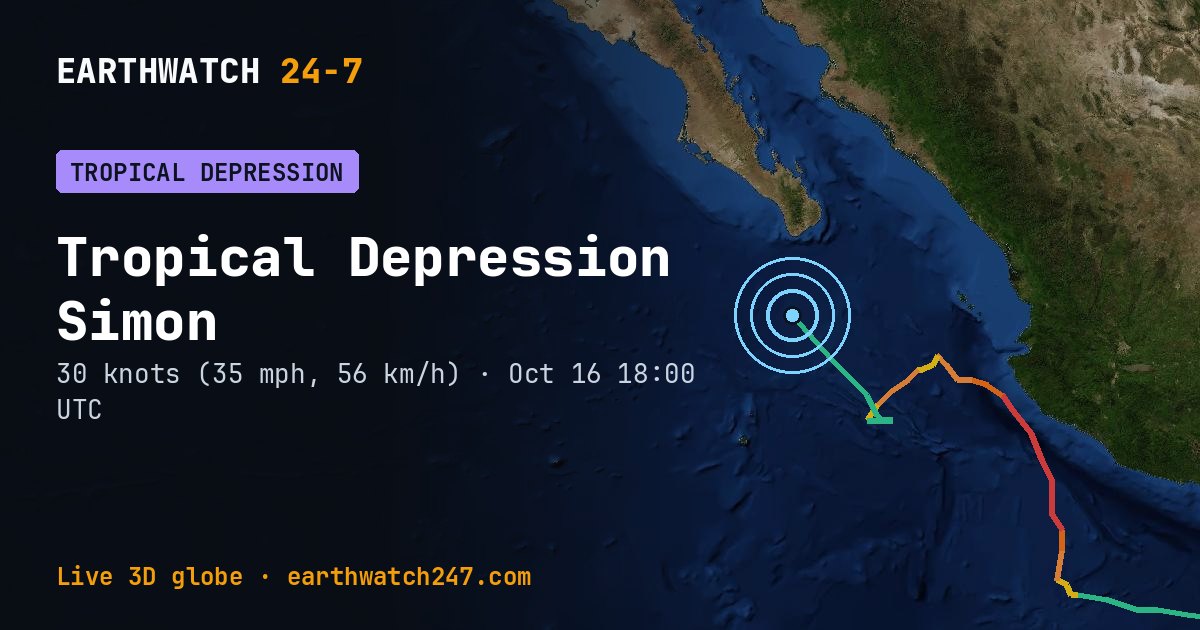
Tropical Depression Simon was last tracked about 177 km (110 mi) south of Cabo San Lucas on October 16, 2026 at 18:00 UTC, with maximum sustained winds of 30 knots (35 mph, 56 km/h). NASA’s tracking ended after 9 days.
It traveled about 1,595 km (991 mi) over its life, and its strongest winds were 135 knots (155 mph, 250 km/h) on October 11.
Intensity over its life
Seen from space
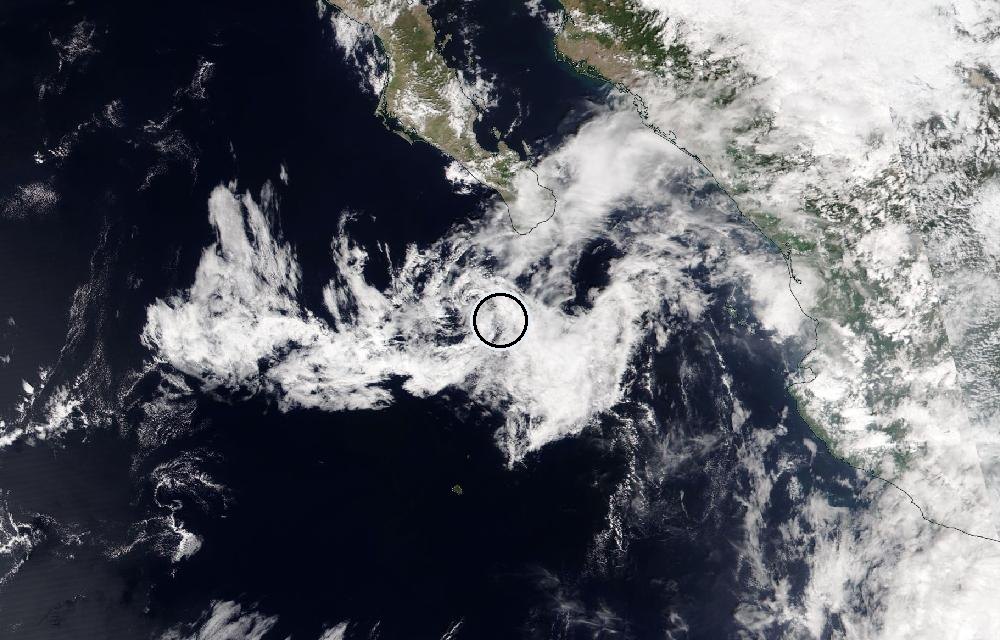
True color from the VIIRS instrument on the NOAA-20 satellite. The ring marks where the event was reported. Pictures: NASA Worldview (GIBS) from the daily satellite passes; clouds can hide the ground on some days.
The Saffir-Simpson scale
Hurricanes are rated 1 to 5 by their strongest sustained winds.
| Category | Winds | Damage | |
|---|---|---|---|
| 1 | 74–95 mph | 119–153 km/h | Very dangerous winds will produce some damage |
| 2 | 96–110 mph | 154–177 km/h | Extremely dangerous winds will cause extensive damage |
| 3 | 111–129 mph | 178–208 km/h | Devastating damage will occur (a major hurricane) |
| 4 | 130–156 mph | 209–251 km/h | Catastrophic damage will occur |
| 5 | 157 mph or higher | 252 km/h or higher | Catastrophic damage; most of the area uninhabitable for weeks or months |
Hurricane, typhoon or cyclone?
They are the same kind of storm: a spinning, warm-core system that feeds on warm ocean water. Over the North Atlantic and the eastern and central North Pacific it’s a hurricane; over the western North Pacific a typhoon; over the Indian Ocean and the South Pacific a cyclone. Below 39 mph (63 km/h) it’s a tropical depression.
For official forecasts and warnings, follow your national weather service (in the U.S., the National Hurricane Center).
Did you know?
Hurricane energy. A hurricane is powered by heat released when water vapor from the warm ocean condenses into clouds and rain.
More: every tropical storm · all events
More from around the world
- Falcon 9 Block 5 launch: Starlink Group 15-21Nov 5, 2026
- Asteroid 2025 UK9 flies past EarthOct 31, 2026
- Falcon 9 Block 5 launch: Starlink Group 15-18Oct 29, 2026
- Falcon 9 Block 5 launch: Starlink Group 15-16Oct 26, 2026
- Long March 8A launch: Unknown PayloadOct 25, 2026
- Falcon 9 Block 5 launch: Starlink Group 15-15Oct 23, 2026
- Long March 4B launch: Unknown PayloadOct 23, 2026
- Asteroid 2026 UA1 flies past EarthOct 23, 2026