Tropical Depression Isaias

Tropical Depression Isaias was last tracked about 42 km (26 mi) north of London, Kentucky on October 11, 2026 at 15:00 UTC, with maximum sustained winds of 20 knots (23 mph, 37 km/h). NASA’s tracking ended after 4 days.
It traveled about 2,190 km (1,361 mi) over its life, and its strongest winds were 105 knots (121 mph, 194 km/h) on October 9.
Intensity over its life
Seen from space
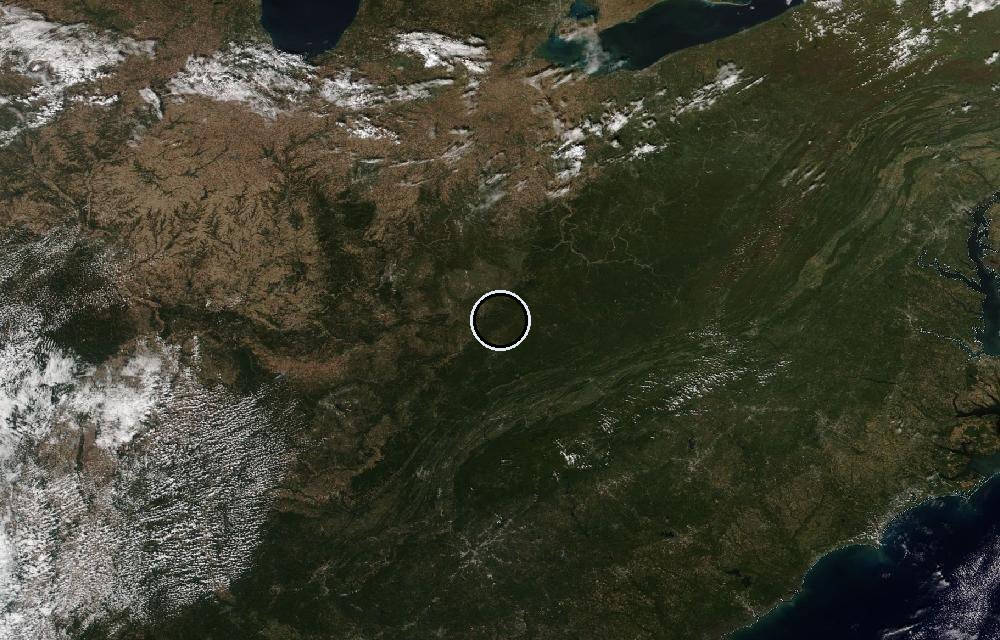
True color from the VIIRS instrument on the NOAA-20 satellite. The ring marks where the event was reported. Pictures: NASA Worldview (GIBS) from the daily satellite passes; clouds can hide the ground on some days.
The Saffir-Simpson scale
Hurricanes are rated 1 to 5 by their strongest sustained winds.
| Category | Winds | Damage | |
|---|---|---|---|
| 1 | 74–95 mph | 119–153 km/h | Very dangerous winds will produce some damage |
| 2 | 96–110 mph | 154–177 km/h | Extremely dangerous winds will cause extensive damage |
| 3 | 111–129 mph | 178–208 km/h | Devastating damage will occur (a major hurricane) |
| 4 | 130–156 mph | 209–251 km/h | Catastrophic damage will occur |
| 5 | 157 mph or higher | 252 km/h or higher | Catastrophic damage; most of the area uninhabitable for weeks or months |
Hurricane, typhoon or cyclone?
They are the same kind of storm: a spinning, warm-core system that feeds on warm ocean water. Over the North Atlantic and the eastern and central North Pacific it’s a hurricane; over the western North Pacific a typhoon; over the Indian Ocean and the South Pacific a cyclone. Below 39 mph (63 km/h) it’s a tropical depression.
For official forecasts and warnings, follow your national weather service (in the U.S., the National Hurricane Center).
Did you know?
Why they weaken over land. Hurricanes usually weaken quickly after landfall because they lose their supply of warm ocean water.
More: every tropical storm · all events
More from around the world
- Falcon 9 Block 5 launch: Starlink Group 15-21Nov 5, 2026
- Asteroid 2025 UK9 flies past EarthOct 31, 2026
- Falcon 9 Block 5 launch: Starlink Group 15-18Oct 29, 2026
- Falcon 9 Block 5 launch: Starlink Group 15-16Oct 26, 2026
- Long March 8A launch: Unknown PayloadOct 25, 2026
- Falcon 9 Block 5 launch: Starlink Group 15-15Oct 23, 2026
- Long March 4B launch: Unknown PayloadOct 23, 2026
- Asteroid 2026 UA1 flies past EarthOct 23, 2026