Fireball near Ongwediva, Namibia
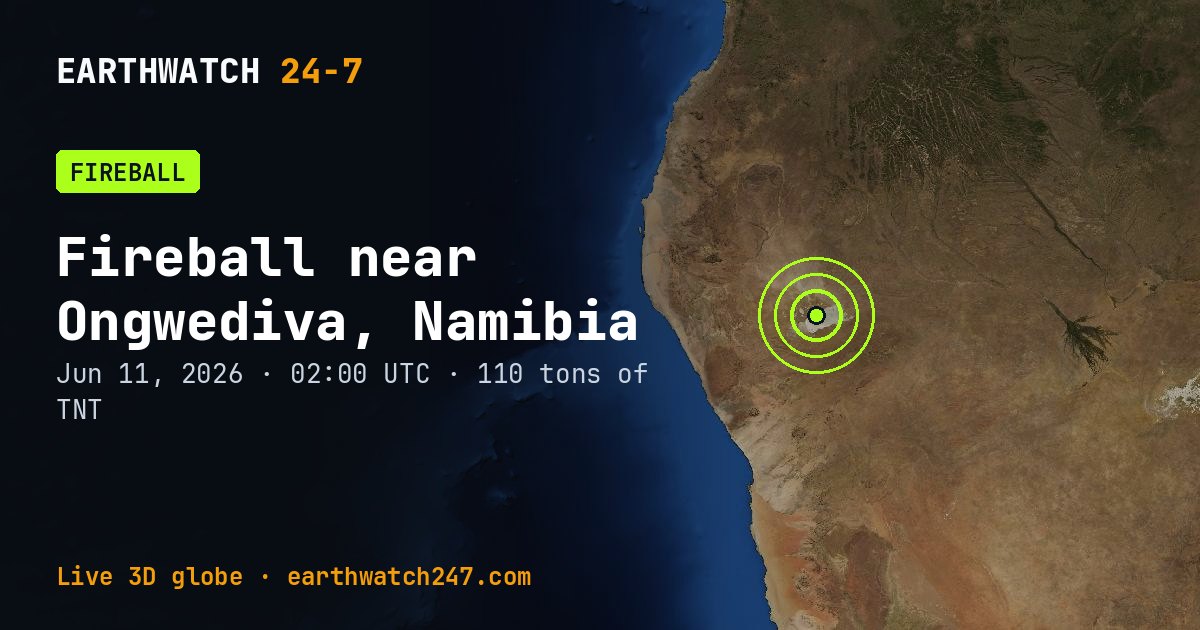
A fireball, a small asteroid burning up in the atmosphere, exploded about 108 km (67 mi) south of Ongwediva, Namibia on Thursday, June 11, 2026 at 02:00 UTC, about 33 km (21 mi) up. U.S. government sensors measured its energy at about 110 tons of TNT. Explosions this high up rarely cause damage on the ground.
How big was it?
Most fireballs come from rocks a meter or a few meters across. The 2013 Chelyabinsk fireball over Russia, about 440 kilotons, was the largest in a century; it shattered windows across the city. Most land over the ocean, unseen.
Did you know?
Rubble piles. Many asteroids are rubble piles: loose heaps of rock held together by their own weak gravity, more like gravel than a solid boulder.
Data: NASA JPL CNEOS fireball reports, from U.S. government sensors.
More: every space weather and near-Earth page · all events
More from around the world
- Falcon 9 Block 5 launch: NROL-195Nov 5, 2026
- Falcon 9 Block 5 launch: Starlink Group 15-21Nov 5, 2026
- Asteroid 2025 UK9 flies past EarthOct 31, 2026
- GSLV Mk. II launch: IRNSS-1LOct 30, 2026
- Falcon 9 Block 5 launch: Starlink Group 15-18Oct 30, 2026
- Falcon 9 Block 5 launch: Starlink Group 15-16Oct 27, 2026
- Long March 8A launch: Unknown PayloadOct 25, 2026
- Hurricane VanceOct 24, 2026